Free herbicide resistance testing
WORDS & IMAGES PROVIDED BY FAR
Arable growers worried that some weeds in their crops may have developed herbicide resistance can now get the suspected plants tested for free.
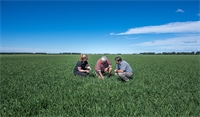
Foundation for Arable Research senior field research officer Matilda Gunnarsson says that prior to harvesting, farmers should get weeds growing in their crops tested for herbicide resistance. While some weeds will have emerged after the final herbicide application some may have survived treatment and have resistance.
“To find out, get it tested,” Matilda says.
“Resistance is a numbers’ game. The more weeds you have in a paddock, the more likely it is that there will be resistance.”
Typical weeds are grass weeds in cereal crops. “It can be grasses or broadleaf weeds. Whatever you suspect is resistant, get it tested.”
To get the suspect plants tested, farmers need to cut off dry, mature weed seed heads and put them in a paper or plastic zip lock bag. Go to the FAR website, print out the herbicide resistance testing form and fill out the details including what herbicides have been used. Send this to the FAR office.
Seed will be tested at AgResearch facilities (now part of the Bioeconomy Science Institute). Depending on the amount of seed available, samples will be tested over one to six herbicides at label rates to determine resistance. This includes both pre and post emerge herbicides if applicable.
“Make sure the weed seeds are viable to achieve a good germination rate at testing. Keep the plants in separate bags, as this gives a better understanding of the resistance profile in the paddock,” Matilda says.
Related

Despite the cost of growing a maize silage crop rising about 30 per cent in the last four years, gro...
Read More

We will look at the following this month: Autumn sown Crops, Gibberellic Acid on pasture, and monito...
Read More
August has continued to deliver typical Mid Canterbury winter conditions, with cold temperatures, fr...
Read More

Catch cropping is an important tool to help reduce nutrient losses while maintaining productivity. L...
Read More
We will look at the following this month: Autumn sown Crops, Barley Grass Control, Lucerne Crops and...
Read More
July is firmly winter mode on farm. Crops are ticking along quietly, soils remain cold and wet, and ...
Read More